Context & Relevance
1. Karnataka is the largest silk-producing state in India, with sericulture deeply rooted in its tradition and economy.
2. Currently, about 1.39 lakh families cultivate mulberry on 1.08 lakh hectares, contributing an estimated 11,200 MT of raw silk annually.
3. To sustain and expand this industry, around 20 crore silkworm eggs are required every year.
Role of VSSPC
1. Commercial silkworm seed production is presently undertaken by the Central Silk Board, State Sericulture Departments, and Registered Private Seed Producers.
2. The Government actively encourages private seed producers to scale up production and meet domestic and global silk demands.
Here We Go -Future Goals
In alignment with this vision, VSSPC aims to:
- Enhance production capacity while maintaining strict quality standards.
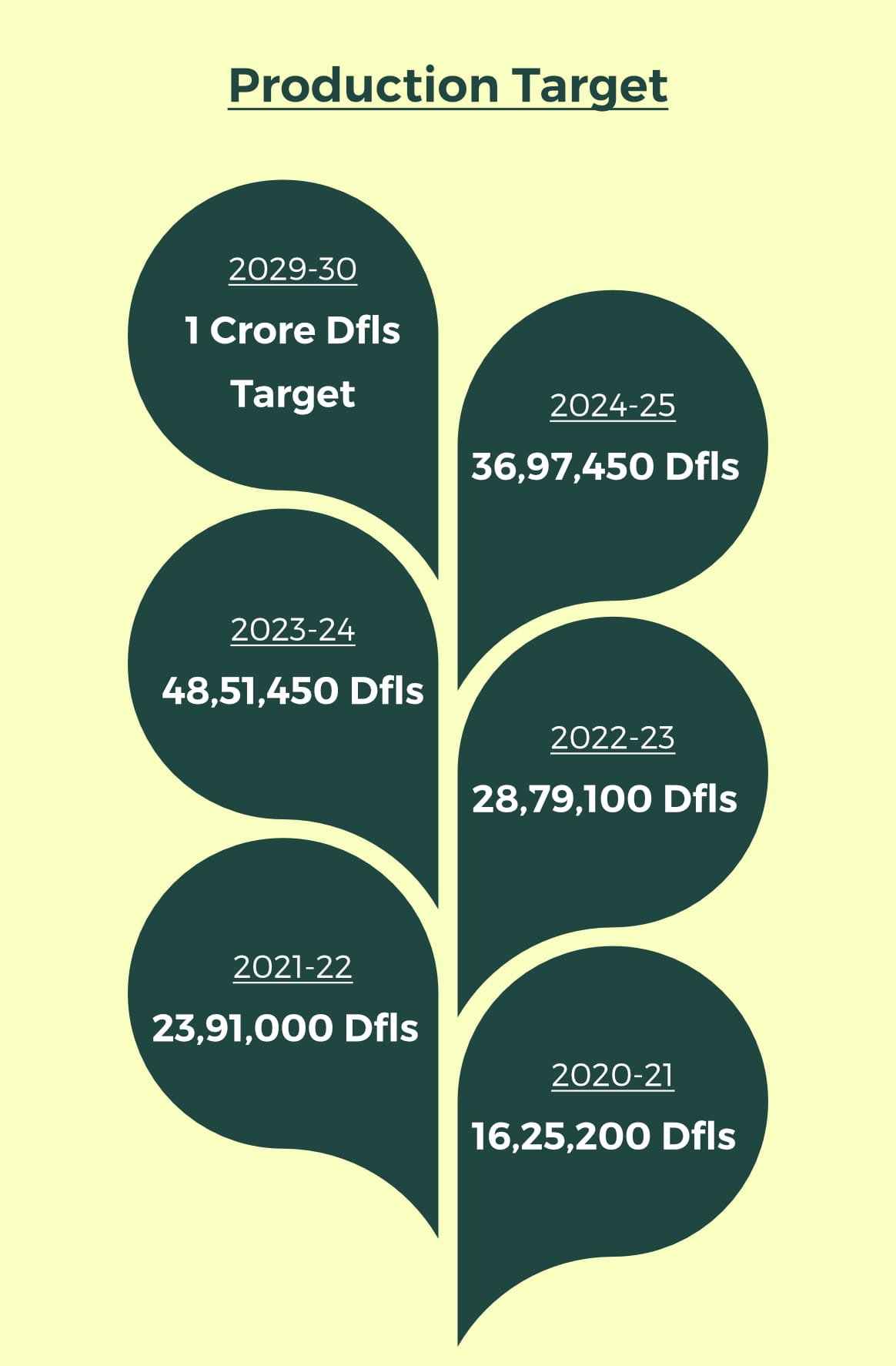
- Reach a target of 1 crore DFLs per year in the coming years.
- Support farmers with disease-free, high-quality Bivoltine silkworm eggs, ensuring better yields and improved livelihoods.
- Contribute to Karnataka’s leadership in sericulture and strengthen India’s presence in the global silk market.
India – Vision 2030 & VSSPC’s Commitment
The Government of India has charted an ambitious Vision 2030 Programme for the sericulture sector, aiming to increase the country’s raw silk production to 21,175 MT by 2030. This surge in silk production would significantly increase the demand for high-quality silkworm seeds, creating new opportunities and challenges for both public and private seed producers.
VSSPC’s Role in Vision 2030
As a prominent private organization specializing in the production and supply of silkworm seeds, VSSPC is committed to:
- Supporting India’s silk production goals by supplying quality Bivoltine Disease-Free Layings (DFLs).
- Ensuring stringent quality standards to enhance farmers’ productivity and profitability.
- Scaling up production to meet the growing national demand for silkworm seeds.
Production Target 2025–26
In alignment with Vision 2030, VSSPC has set a target production of 60 lakh DFLs of Bivoltine hybrid silkworm eggs for the year 2025–26, with plans to expand further and reach 1 crore DFLs in the coming years.